Extinction is forever
One million species are threatened with extinction within just decades.
(Intergovernmental Panel on Biodiversity and Ecosystems Services, IPBES)
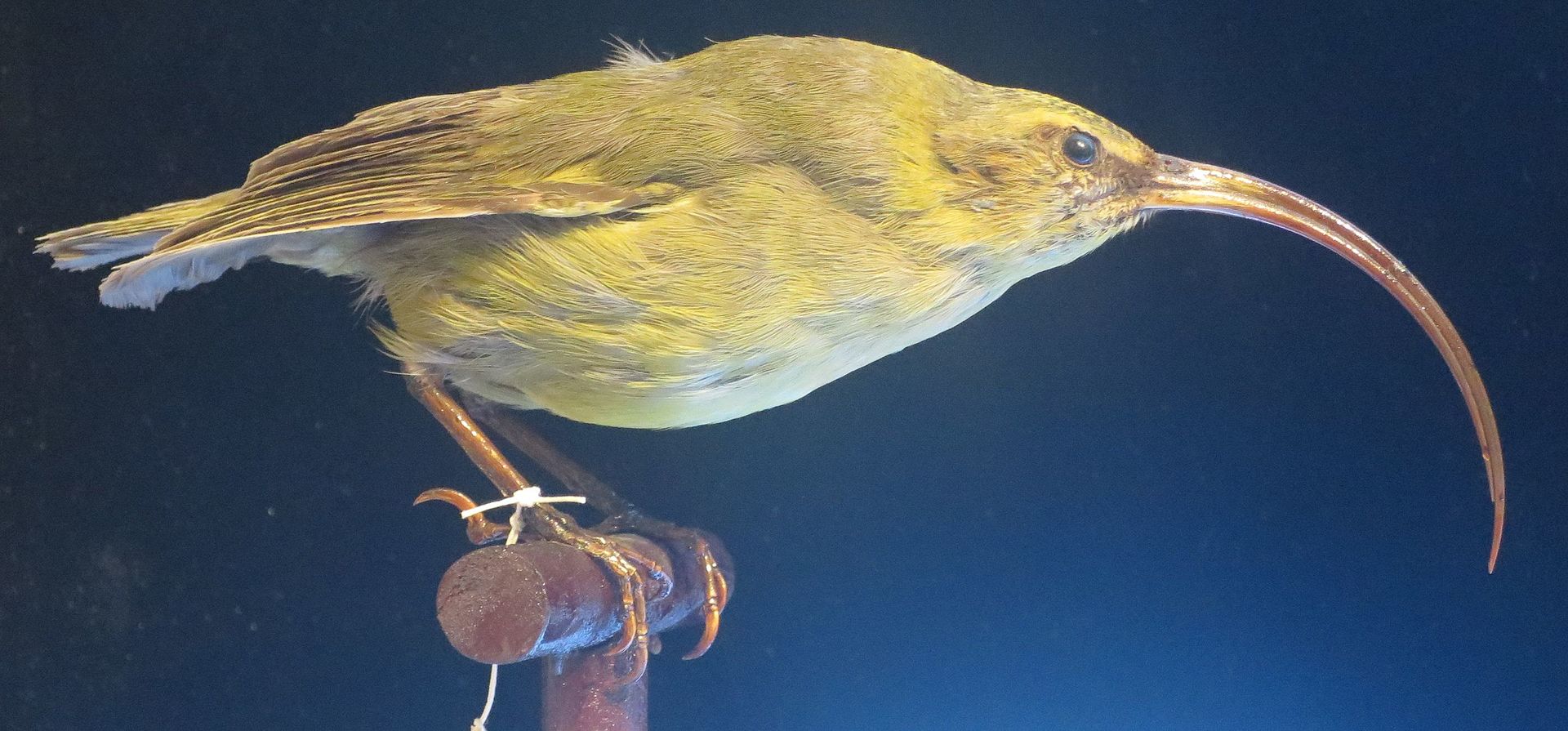 Kauai ʻakialoa (Akialoa stejnegeri) †. A Hawaiian honeycreeper endemic to Kauai. Extinct 1969 due to introduced avian disease and habitat loss.
READ MORE
The diversity of life is the defining feature of our planet. It's in catastrophic decline. Crying wolf? Unfortunately not. And extinction is forever. Losing a species means also losing its role in its ecosystem. If it happened to be a critical (keystone) species, cascading effects will completely degrade and transform the habitat.
Birds, mammals and other vertebrates have lost more than 50% of their populations in the last 50 years. Some evidence suggests that plants and insects are declining just as quickly. Although this collapse in slow motion has catastrophic consequences for life on Earth, it receives little public attention. But it must be urgently addressed.
Biodiversity in freefall
It’s simply stunning: the decline in abundance of vertebrates (fish, amphibians, reptiles, birds, mammals) exceeds 50% in the past 50 years!
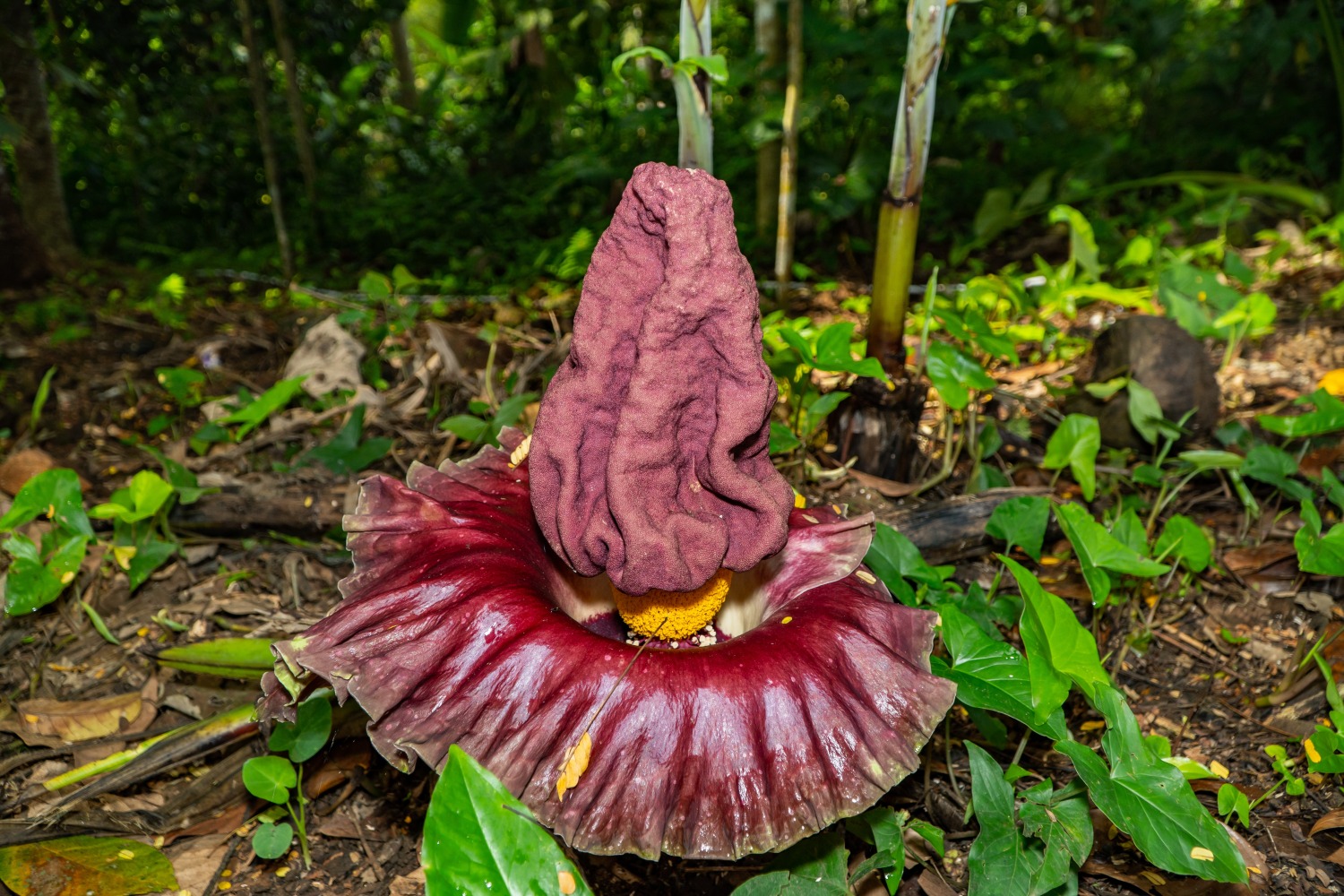 Extinction often starts almost imperceptibly; some populations of a species start thinning out. Endangered Titan Arum, Amorphophallus titanum, Western Sumatra.
READ MORE
The estimate is less clear for plants, fungi and for invertebrates. However, some evidence suggests that plants and insects are declining just as quickly as vertebrates do.
Invertebrates include protozoa, sponges, polyps, flatworms, roundworms, annelids (e.g. earthworms), echinoderms (e.g. starfish, sea urchins), molluscs and arthropods (e.g. insects, crustaceans, spiders, millipedes).
It’s these life forms (plus plants and fungi) that generally form the backbone of ecosystems. Losing them means also losing the interactions between these species: the ecosystems become dysfunctional.
Although extinction of species is a natural phenomenon, it currently happens 1’000 to 10’000 times faster than the background rate of extinction known from evolutionary history. It has two fundamental causes, tabooed in public discourse: the exponential increase in both the number of humans and their insatiable desires.
Our needs are degrading natural ecosystems a lot faster than we can research them. The collateral damage is immense - and very likely an even bigger threat to life - including us - than climate change.
Species collapse in slow motion
Thousands of species survive only in a few tiny populations which are at high risk of vanishing.
READ MORE
Losing species is like going bald. At first everything seems normal. The hair just gets a little thinner. But then it stops growing back.
In species heading for extinction, the number and density of populations declines first, while the species is still observable. Then, more and more thinned-out populations disappear. Before it dies out, the species may persist for a while, unable to reproduce and functionally extinct.
Even under normal conditions, life in the wild is a walk on knife’s edge. It takes only a few unfavourable factors combined to drive a species over the edge – slowly, but surely. That’s especially true if the evolutionary adaptation simply can’t cope with the required speed of change. The deceivingly normal appearance of disintegrating ecosystems and the almost imperceptible loss of species are among the biggest challenges in conservation.
Thousands of species survive only in a few tiny populations which are at high risk of vanishing.
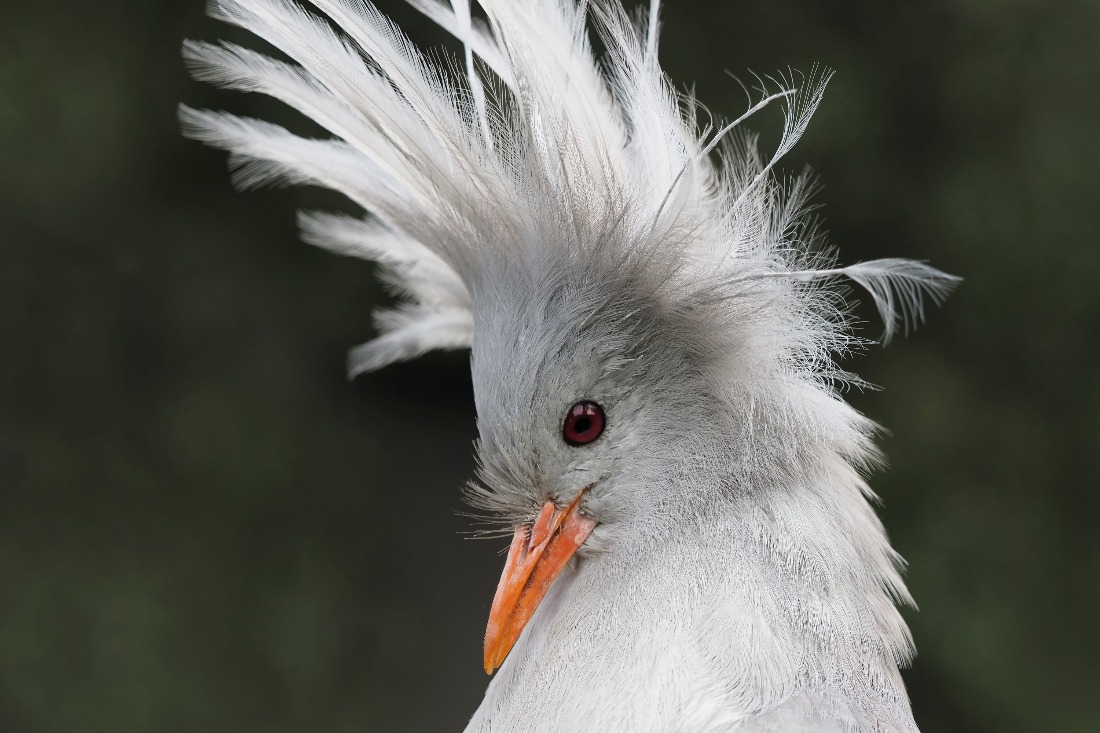 Kagu (Rhynochetos jubatus), New Caledonian endemic, almost flightless. Single species in its own family. EDGE rank (birds) 5. Endangered. Global population 250 to 1000 individuals, declining due to predation by introduced predators.
Stopping extinction – can we manage?
Extinction is real. Here are just a few arbitrary examples of precious genomes lost forever. Each of these species played a role in its ecosystem, which after losing it has changed irreversibly.
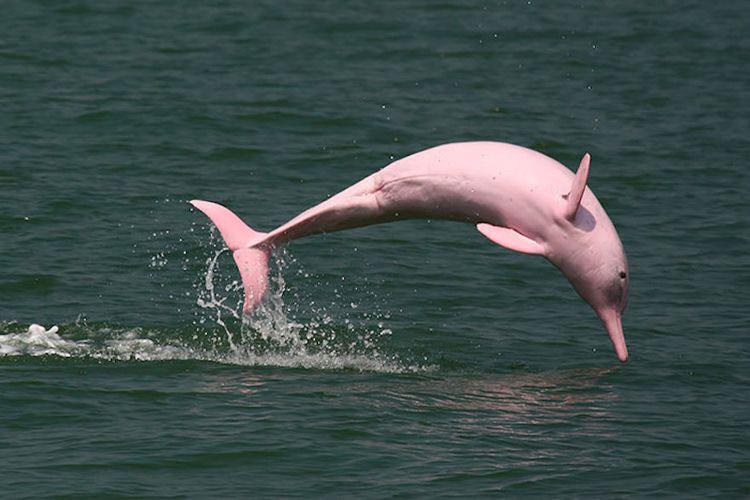 Each species is a unique solution to the challenges of survival. Yangtze river dolphin, Lipotes vexillifer. † 2002.
Key drivers of extinction must be brought under control
The root cause of the extinction crisis can be named in 6 words: too many humans, too many desires. These two are largely tabooed, including in many international organizations.
READ MORE
The excessive increase of the human population has severe consequences:
- Expanding the exploitation of land and sea, especially for food
- Direct exploitation (building settlements and traffic lines, cutting forests, ploughing grasslands, overfishing the oceans)
- Climatic change (a slower but growing impact)
- Pollution
- Invasive species and pathogens spread by human activities
A key driver of biodiversity loss is our food system, notably the extremely high land use for livestock bred for (excessive) meat consumption.
Another key cause for losing species is human-made fragmentation of habitats. The smaller and less connected a habitat, the fewer species it can sustain. This connection is logarithmic (and dependent on the type of ecosystem and the type of species). A 50% reduction of viable habitat results in a roughly 10% loss of species; a 90% reduction of habitat in a 50% loss of species.
30x30: Optimal, not maximal use of nature
The relentless growth of the human population continues to degrade ecosystems at breathtaking speed. Watching and waiting is not an option. We must act now.
READ MORE
Although climate change dominates the headlines, in the background governments have also started discussing the extinction crisis. Current policy responses try to address food through intensive agriculture, biodiversity through protected areas, and climate change through reducing emissions.
In 2023 the United Nations Convention on Biological Diversity (CBD) met in Montreal, adopting the Kunming-Montreal Global Biodiversity Framework as a shared international roadmap out of the ecological crisis. This ambitious commitment includes 23 targets aimed at reversing habitat and species loss, including Target 3 (“30x30”), which calls for effectively protecting 30% of the world’s terrestrial, inland water, coastal and marine areas by 2030. At present only about 17% of terrestrial and 8% of marine areas are under some form of protection, which often may not be truly effective.
30x30 is an immensely positive development and a huge commitment, but it won’t be achievable unless people at local, regional, national and international levels begin to understand and endorse the prime value of intact ecosystems and thus their species.
To ease the relentless pressure on other life, we must also learn to reduce and reverse disturbance and further degradation of already impoverished ecosystems, and to reconnect these remnants to increase their viability for other species. Given the prevailing anthropocentrism, this is a huge challenge.
In the long term, however, we need to also address our own numbers and needs. Clearly, 10 or 12 billion top predators on Earth are too many. They put the trophic pyramid upside down, creating massive ecological and ethical fall-out.
The human species urgently needs ethical and economically manageable ways to curb its explosive proliferation. The goal must be an optimizing rather than maximizing use of nature. This will require to
- Limit the number of humans straining the ecosystems
- Limit the number and scope of individual and collective human desires.
In short: less for us, more for other life. This requires acknowledging that we are no more and no less than “life that wants to live amidst life that wants to live” (Albert Schweitzer, 1875-1965).
We offer no cheap advice on how to tackle this immense problem. However, tabooing it belies its existential nature, enormity and pervasiveness.
