
 Source and ©: EDGE. https://aboutzoos.info/evolution/edge
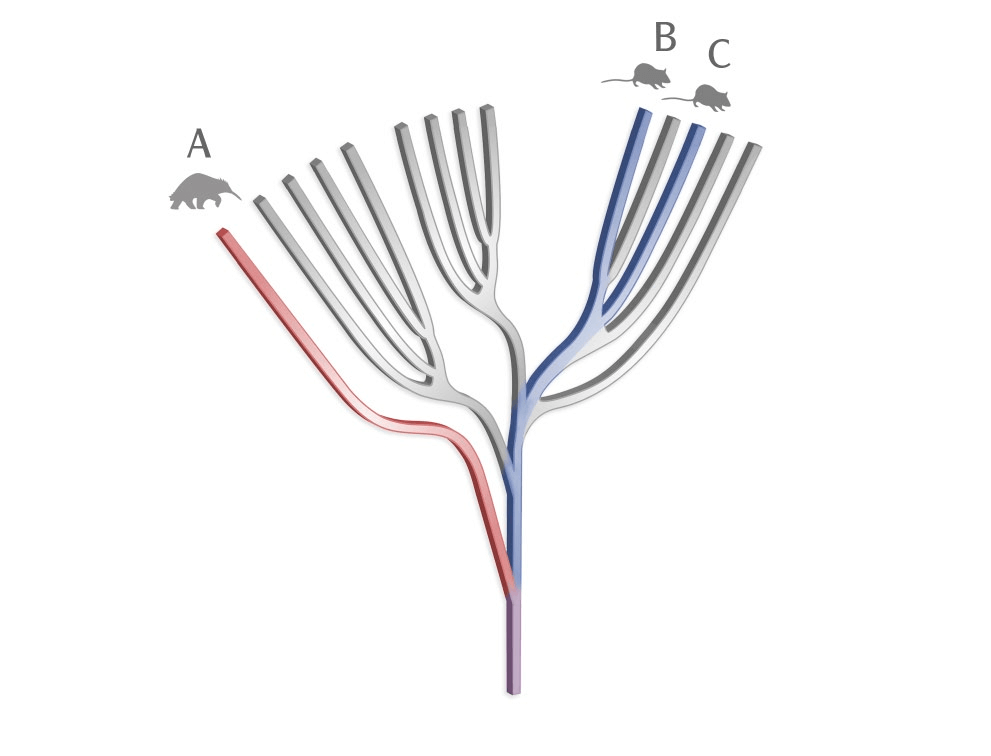
A mouse-type rodent represents a family comprising almost half of the roughly 4,660 known mammal species. In contrast, an echidna or a pangolin has few close relatives and has been evolving independently for millions of years. That makes it especially precious: a branch, not a twig.
Such 'Evolutionary Distinctiveness' (ED) can be expressed as a score, which is calculated using a phylogeny (evolutionary tree), and relative to a clade (monophyletic group with a common ancestor). Combining genetic distinctiveness with global threat results in an EDGE score (evolutionarily distinct and globally endangered). One can then rank EDGE species per group, the top rank being 1.
That’s also useful for overruling the common mammal-and-bird bias, which makes us prefer creatures that are familiar to us. Some charismatic, well known EDGE species (think of a Giant Panda, African Elephant or Orang Utan) receive significant conservation efforts. In contrast, other EDGE species under high threat are largely unknown, poorly researched, and commonly overlooked by existing conservation frameworks. Yet these — the un-cute and ugly — are just as important. Indeed, it's mostly the creepy-crawly critters which keep the living world alive and kicking.
We also pay special attention to keystone species (those pivotal for an ecosystem) and to ecosystems of high importance, especially if they receive inadequate conservation funding.
To make the most of our funding, we focus on species and habitats of exceptional importance and under high threat, with or without emotional appeal.
